Education for Climate Action Program (2022–2025)
Supported by Tata Trusts
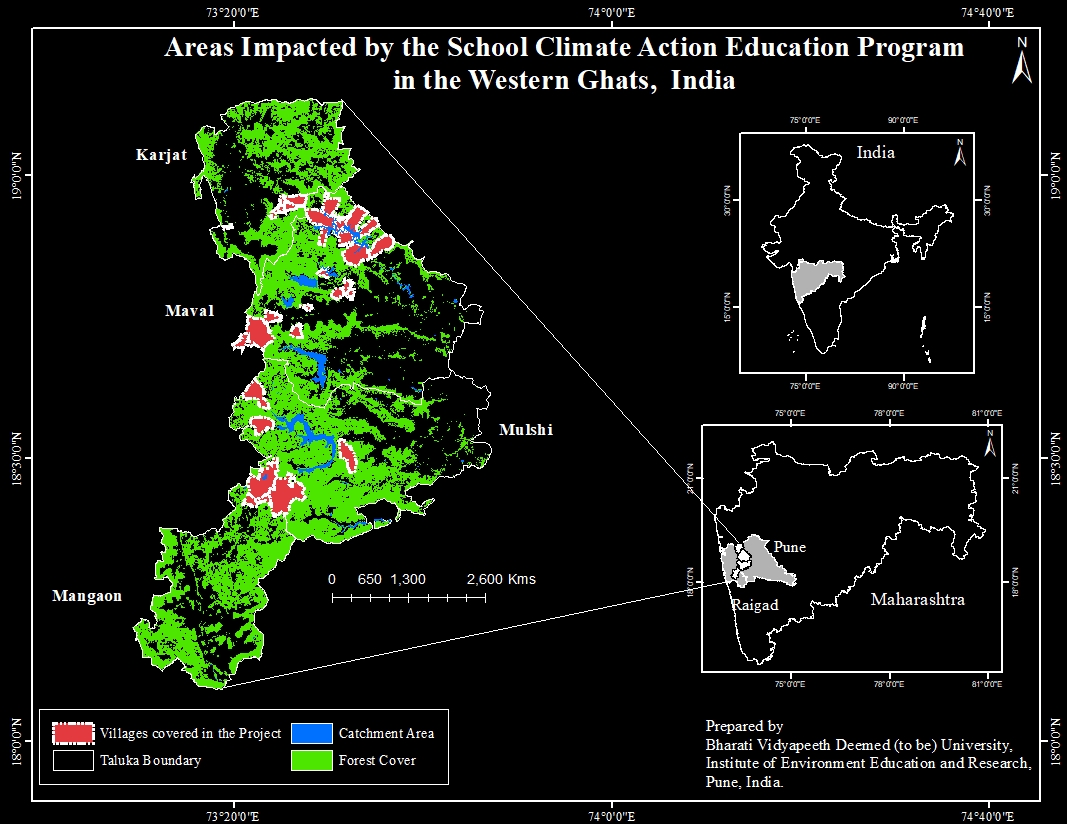
Implemented across 35 Schools in Mulshi, Mangaon, Maval, Karjat and Urban Pune
Overview
Climate change is one of the greatest challenges humanities is facing today. Communication, Education, and Public Awareness are critical tools for participatory action in addressing both mitigation and adaptation strategies. Ecologically sensitive areas, particularly those in the Western Ghats, are highly vulnerable to climate-induced disasters such as landslides, floods, cloudbursts, and extreme weather events.
The Education for Climate Action Program was conceptualized to address these challenges by engaging local communities—especially school students—in climate action through a formal and non-formal educational framework aligned with India’s National Education Policy 2020.
Objectives
-
To build capacity among teachers to embed climate action in their classroom pedagogies.
- To sensitize students using innovative and experiential pedagogical tools that build Head (Cognitive), Hand (Action-Oriented), and Heart (Socio-Emotional) competencies.
- To develop and implement Climate Action Projects (CAPs) within schools and communities.
- To create and disseminate engaging educational materials including posters, booklets, videos, games, activity worksheets, and organizing exposure visits.
Program Reach
- 35 schools in Mulshi, Mangaon, Maval, Karjat
- 2 urban schools in Pune city
- 1280 students sensitized
- 50 teachers trained
- 40 Climate Action Projects implemented
Program Modules
The program used an action-based and experiential approach through 10 structured modules:
- 1.Understanding Weather and Climate
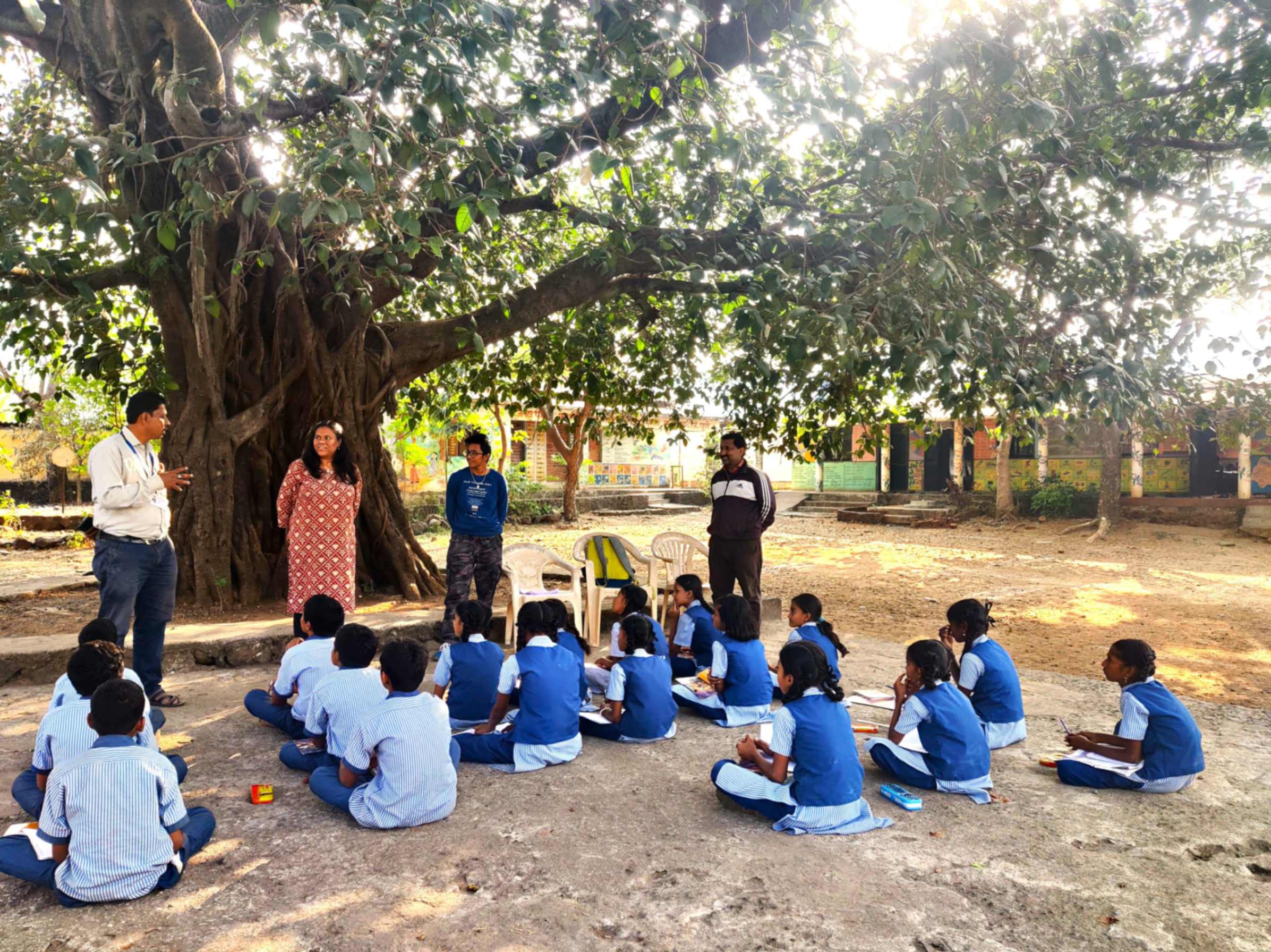
Built foundational knowledge on weather, seasons, and climate; led to high student engagement.
- 2.Climate Change: Causes and Effects
Explored localized climate impacts, enabling students to connect global concerns to their surroundings.
- 3.Tools and Techniques for Data Collection
Trained students in basic research methods to prepare for CAPs.

- 4. Exposure Visit to Local Ecosystems
Helped students observe the effects of climate change in real environments.

- 5. Climate Change and Sustainable Development
Connected climate themes with the three pillars of sustainability using AV aids and activities.

- 6. The Web of Climate (Game-Based Module)
A fun, conceptual game using string and pictorial cards to link cause-effect-action in climate science.

- 7. Life Cycle Assessment (LCA)
Analysed the environmental footprint of everyday products like food, clothes, stationery, etc.

- 8. Green School Audit
Audited school campuses on water, energy, waste, biodiversity and cleanliness indicators.

- 9. Natural Disasters: Types, Causes, and Preparedness
Included a quiz, case studies and creation of School Evacuation Maps for disaster resilience.

- 10. Hands-on Session on Terrarium Building
Enabled students to model forest ecosystems and study disruptions caused by climate change.

Annual Climate Action Fairs
Two Annual Fairs were organized during the program to showcase students’ Climate Action Projects. These fairs became vibrant platforms for peer learning, community engagement, and creativity.


Teacher Training Workshops
The program emphasized a Whole School Approach, enabling the transfer of knowledge from classrooms to communities. Teachers underwent intensive training on:
-
Climate concepts: Ecosystem-based adaptation, lifestyle changes, disaster management.
- Pedagogical strategies for integrating climate education with subjects.
- Hands-on sessions using Geoinformatics tools, including Google Earth.
- Exposure visit to Bhigwan, focusing on biodiversity, ecosystems, and the value of field learning.


Project Outcome
Improved student competencies using the Head–Heart–Hand framework:
-
Head (Cognitive): Students demonstrated strong understanding of climate concepts (scoring an average of 4/5 in evaluations).
-
Heart (Socio-emotional): Students developed deep emotional connections to their local environments (average score: 5/5).
-
Hand (Action-oriented): Active engagement in CAPs and hands-on modules showed a high level of skill acquisition and enthusiasm for climate solutions (average score: 5/5).
-
Experiential learning strategies such as terrarium-making, school audits, local ecosystem visits, and games like “Web of Climate” enhanced knowledge retention and values-based action.
-
Teacher Training Workshops empowered educators with tools to integrate climate change education into regular curricula using digital mapping (e.g., Google Earth), geoinformatics, and theme-linked pedagogies in subjects like science, geography, and social studies.
- The Whole School Approach adopted under the program ensured that climate action extended beyond the classroom — influencing school operations, student behavior, and community practices.
This integrated, competency-based and action-oriented approach proved highly effective in building climate resilience, ecological sensitivity, and a culture of sustainability among young learners in ecologically fragile regions.